
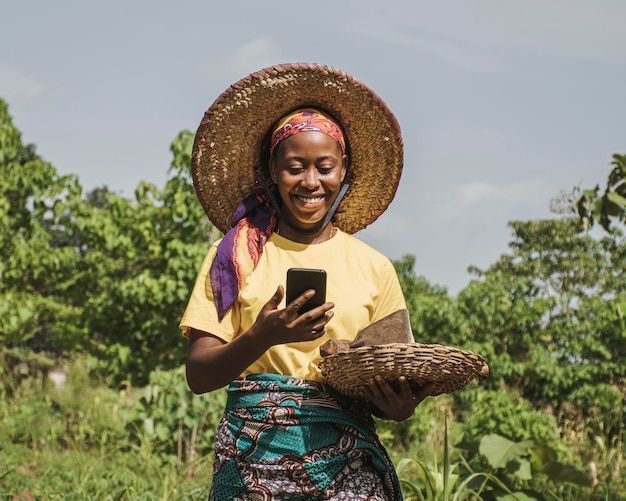
Across Africa’s diverse landscape from the bustling cities of Lagos and Nairobi to the quiet rural settlements in Malawi and Chad one truth remains constant: every voice matters. Yet, for decades, gathering those voices from remote or rural regions has been one of the biggest challenges for researchers, development partners, and organizations seeking reliable data.
But there’s a quiet revolution reshaping how Africa is heard. It’s not powered by drones or satellites. It’s powered by telephones and the method known as CATI (Computer-Assisted Telephone Interviewing).
In a world racing toward digital data collection, telephone surveys stand as one of the most resilient, inclusive, and efficient tools for reaching respondents far beyond the internet’s reach.
1. The African Landscape: Bridging the Connectivity Divide
Africa’s population exceeds 1.4 billion people, and while digital growth is impressive, internet penetration remains uneven. In many countries, over half of the rural population still lacks stable internet access, yet mobile phone ownership continues to rise, cutting across economic and geographical divides.
In Nigeria, for example, mobile phone penetration has surpassed 80%, even in areas where internet access is below 45%. In Kenya, rural communities use mobile phones for everything from banking (via M-Pesa) to market updates.
This is where telephone surveys find their strength in their ability to leverage existing communication tools to bridge research gaps. While online surveys struggle with limited internet coverage, and face-to-face interviews face logistical barriers, telephone surveys reach people wherever mobile networks exist, bringing inclusivity to the forefront of data collection.
2. The Power of CATI: Turning Calls into Quality Data
At the heart of telephone surveys is the CATI system, a software-supported method that allows interviewers to conduct phone interviews while recording responses directly into a digital interface.
This innovation does more than save paper it ensures data accuracy, quality control, and real-time supervision. Supervisors can monitor ongoing interviews, review completed surveys instantly and ensure adherence to research standards.
Unlike manual phone surveys, CATI brings automation to the process:
-
Interviewers follow standardized scripts, minimizing human error.
-
Responses are captured instantly, reducing data entry time.
-
Data validation occurs in real time, ensuring consistency.
In remote African settings, where logistical challenges can slow fieldwork, CATI accelerates data collection enabling organizations to gather high-quality insights within days rather than weeks.
3. Human Connection in a Digital Age
What sets telephone surveys apart isn’t just efficiency it’s the human touch.
In Africa, communication is deeply relational. People respond not just to questions, but to the tone, warmth, and understanding of the person asking them. Trained interviewers who speak local languages and understand cultural nuances can build instant rapport, encouraging respondents to share authentic answers.
A soft voice in Swahili, Hausa, Amharic, or French can make the difference between a hesitant “yes” and an open, insightful conversation.
That’s why at CATI Africa, we prioritize interviewer training focusing on voice tone, listening skills, empathy, and adaptability because we understand that behind every dataset is a human story waiting to be heard.
4. Overcoming the Challenges of Remote Data Collection
Reaching remote areas in Africa presents unique challenges:
-
Poor road infrastructure can make face-to-face surveys expensive and time-consuming.
-
Security issues in conflict-affected areas can endanger field teams.
-
Cultural barriers may limit direct access, especially where gender or tradition restricts in-person interviews.
Telephone surveys elegantly overcome these obstacles. They reduce risk, cut travel costs, and extend reach to respondents in areas that are otherwise inaccessible.
Moreover, telephone surveys are timely especially in emergencies such as health outbreaks or conflict zones where on-ground access is limited. During the COVID-19 pandemic, for instance, CATI methods kept research and monitoring programs alive while physical movement was restricted.
5. Data Reliability and Real-Time Insights
One of the most underrated strengths of telephone surveys is their data reliability.
CATI software integrates checks and skip logic, ensuring that questions flow correctly and that errors are caught immediately. Responses are automatically stored, timestamped, and geo-referenced when necessary, eliminating transcription delays.
Because data is centralized in real-time, analysts can generate summaries, spot anomalies, and adjust questionnaires while fieldwork is ongoing. This flexibility enables faster decision-making, whether for a public health campaign, an NGO evaluation, or a market research study.
6. Inclusive Voices, Stronger Insights
Inclusion is more than a buzzword it’s the backbone of good research. When communities in far-flung villages participate in national or regional studies, the resulting insights become truly representative.
Through telephone surveys, women in rural Tanzania, small-scale farmers in Ethiopia, or informal traders in Uganda get a chance to contribute their experiences. Their input not only enhances the depth of research but also ensures that decisions whether from government agencies, NGOs, or businesses reflect the realities of all Africans, not just those in urban centers.
7. CATI Africa: Connecting Voices, Powering Decisions
At CATI Africa, we believe that data is only as strong as the voices behind it.
Our mission is simple to make research accessible, inclusive, and reliable across all parts of Africa. With a robust network of multilingual interviewers, cutting-edge CATI systems, and local expertise, we ensure that data collection goes beyond numbers to capture real human experiences.
From public opinion polling to market research, health surveys, and monitoring & evaluation projects, CATI Africa continues to redefine how Africa’s stories are heard one call at a time.
8. The Future of Data Collection in Africa
As Africa’s mobile network continues to expand, the future of telephone surveys looks even brighter. With AI-assisted transcription, improved mobile coverage, and enhanced CATI platforms, telephone interviewing is evolving to meet new research demands.
The next frontier is hybrid research where telephone, online, and in-person methods combine to deliver a 360° understanding of African societies. But even in this tech-driven future, the essence remains the same: listening with empathy and accuracy.
Conclusion: Every Call Counts
Telephone surveys may seem traditional, but in Africa, they remain a powerful modern tool bridging distances, connecting communities, and uncovering truths hidden in remote corners of the continent.
In the hands of experts like CATI Africa, every phone call becomes more than a data point it becomes a bridge between people, perspectives, and progress.
Get in touch with us today to learn how our CATI solutions can support your next research project.